
Van Richten’s Guide to Ravenloft is a pivotal resource, offering Dungeon Masters tools to craft immersive horror campaigns within the Domains of Dread.
It serves as an introduction to this nightmare setting, providing story hooks, character options, and customization for a truly terrifying experience.
The guide emphasizes survival against both supernatural and natural threats, alongside flavorful Darklords and the corrupting influence of power.
What is Ravenloft?
Ravenloft isn’t simply a setting; it’s a collection of isolated Domains of Dread, each a warped reflection of a Darklord’s tormented soul. These realms exist outside the conventional Dungeons & Dragons multiverse, shrouded by the mysterious Mists.
The guide details how these domains are born from tragedy and despair, offering a unique blend of gothic horror and psychological torment. Survival isn’t guaranteed, as both supernatural entities and the harsh environments pose constant threats. It’s a trackless wilderness where knowledge and research become vital tools against seemingly unstoppable foes, and the power fantasy is often a gateway to corruption.
The Domains of Dread: An Overview
The Domains of Dread are diverse and terrifying realms, each ruled by a villainous Darklord, isolated from the prime material plane by the Mists. Van Richten’s Guide expands upon classic domains like Barovia, and introduces new ones like Darkon and Lamordia, each with unique themes and horrors.
These aren’t typical fantasy landscapes; they’re warped reflections of psychological states, filled with gothic castles, haunted forests, and desperate inhabitants. Each domain presents unique challenges, demanding players adapt and utilize knowledge to survive; The guide provides a foundation for DMs to build compelling, domain-specific quests.
Van Richten’s Role in the Setting
Rudolph Van Richten, the renowned monster hunter, serves as a guiding presence throughout the Guide and the Domains of Dread. He isn’t a traditional hero, but a scholar driven by a tragic past and a relentless pursuit of knowledge.
Van Richten provides invaluable insights into the nature of darkness, the weaknesses of monsters, and the psychology of the Darklords. He acts as a mentor, offering advice and warnings, but always maintaining a degree of caution. His presence adds a layer of intrigue and expertise, enriching the campaign experience for both players and the Dungeon Master.
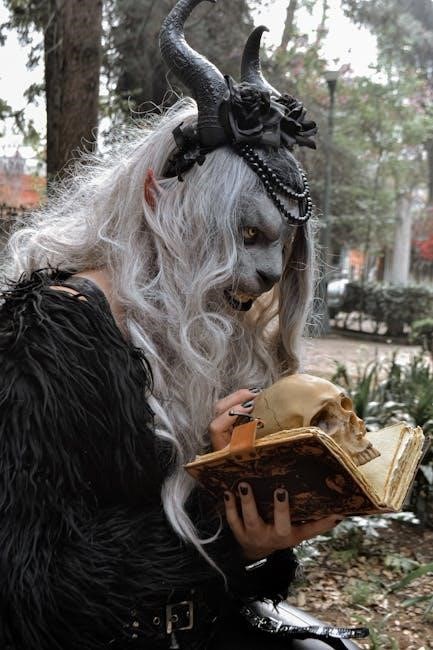
Darklords and Their Domains
Domains of Dread are each ruled by a villainous Darklord, trapped by a curse reflecting their deepest flaws. These realms are isolated, offering unique challenges.
Strahd von Zarovich and Barovia
Strahd von Zarovich, the iconic Darklord of Barovia, embodies gothic horror. His domain is a perpetually gloomy land, shrouded in mist and despair, reflecting his own tormented soul.
He’s a master manipulator, a powerful vampire, and a tragic figure consumed by loss and a thirst for power. Barovia itself is a character, a prison mirroring Strahd’s isolation. The land’s inhabitants suffer under his oppressive rule, caught in a cycle of fear and hopelessness.
Van Richten’s Guide delves deeper into Strahd’s motivations and the intricacies of Barovia, providing DMs with tools to create a truly unforgettable and terrifying campaign centered around this classic Darklord.
Azalin Rex and Darkon
Azalin Rex, the Darklord of Darkon, presents a vastly different kind of threat than Strahd. He is a powerful wizard, obsessed with knowledge and control, ruling over a domain steeped in arcane power and political intrigue.
Darkon is a land where magic is commonplace, but also dangerous and tightly regulated by Azalin. He maintains his power through manipulation, spies, and a network of loyal followers. Unlike Barovia’s overt oppression, Darkon’s control is subtle and insidious.
Van Richten’s Guide expands on Azalin’s complex character and the unique challenges Darkon presents to adventurers, focusing on themes of ambition and the price of knowledge.
Lord Soth and Borca
Lord Soth, the Darklord of Borca, is a tragic figure consumed by regret and a desperate longing for a lost love. His domain reflects this sorrow – a bleak, frozen land perpetually shrouded in mist and haunted by memories.
Soth, a former powerful wizard, is now bound to Borca, endlessly reliving the past and seeking a way to undo his mistakes. He’s less actively malevolent than some Darklords, but his despair creates a pervasive atmosphere of hopelessness.
Van Richten’s Guide delves into Soth’s backstory and the melancholic nature of Borca, offering opportunities for campaigns centered around themes of loss and redemption.
The Nature of Darklord Curses
Darklord curses are central to the tragedy of Ravenloft, binding these villains to their domains and fueling their endless torment. Van Richten’s Guide explores the intricate nature of these curses, revealing they aren’t simply punishments, but reflections of the Darklords’ deepest flaws.
Each curse is unique, tailored to the Darklord’s sins and desires, creating a self-perpetuating cycle of suffering. They cannot truly win or escape, as their domains are extensions of their own corrupted souls.
Understanding these curses is key for players seeking to challenge—or even exploit—the Darklords.

Character Creation for Ravenloft
Van Richten’s Guide expands character options with new backgrounds, lineages like Dhampir and Hexblood, and horror-themed feats, enriching roleplaying within the Domains of Dread.
New Character Backgrounds
Van Richten’s Guide to Ravenloft introduces several new character backgrounds specifically designed to enhance immersion within the gothic horror setting. These backgrounds aren’t merely cosmetic; they provide compelling narratives and connections to the Domains of Dread.
Options include the Haunted One, marked by a tragic past and supernatural encounters, and the Scholar of the Lost, driven by forbidden knowledge. The Urchin, adapted for Ravenloft, might have survived the streets of a cursed town, while the Hermit could have secluded themselves to study dark lore.
These backgrounds offer unique skill proficiencies, tool proficiencies, and importantly, feature suggestions that tie characters directly into the setting’s themes of dread and isolation, fostering richer roleplaying experiences.
Lineages: Dhampir, Hexblood, Reborn
Van Richten’s Guide to Ravenloft expands character creation with unique lineages, moving beyond traditional races to offer options steeped in the setting’s dark fantasy. Dhampir, touched by vampirism, possess enhanced senses and a thirst for blood, but face societal prejudice.
Hexblood, descendants of hags, exhibit subtle magical abilities and a connection to the feywild, often viewed with suspicion. Reborn, individuals resurrected from death, grapple with fragmented memories and a lingering sense of mortality.
These lineages provide distinct abilities, traits, and roleplaying opportunities, allowing players to embody characters intrinsically linked to Ravenloft’s supernatural horrors.
Feats Tailored for Horror
Van Richten’s Guide to Ravenloft introduces feats specifically designed to enhance the horror experience, moving beyond combat prowess to focus on survival and investigation. These feats empower characters to confront the psychological and supernatural challenges of the Domains of Dread.
Options include skills like Observant, granting heightened perception, and skills that bolster resilience against fear and mental manipulation. Others provide advantages in uncovering secrets or resisting dark influences.
These feats encourage players to embrace a more cautious and resourceful playstyle, vital for navigating Ravenloft’s treacherous landscapes and sinister inhabitants.
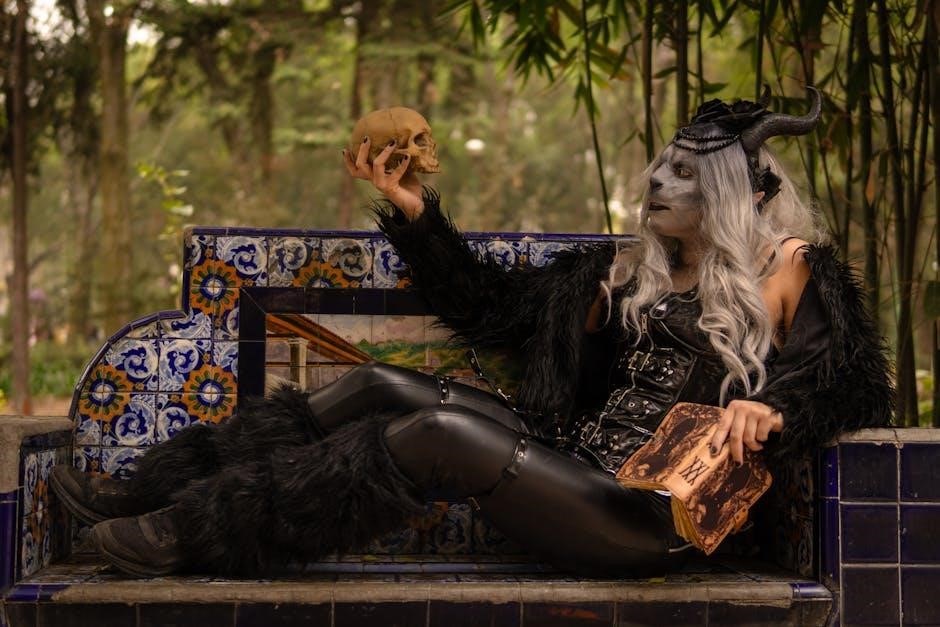
Running a Ravenloft Campaign
Van Richten’s Guide emphasizes gothic horror, isolation, and dread, urging DMs to prioritize atmosphere and player agency within the Domains of Dread.
Tone and Atmosphere: Gothic Horror
Van Richten’s Guide to Ravenloft strongly advocates for a gothic horror tone, moving beyond simple monster slaying to explore themes of psychological dread and moral ambiguity.
This means emphasizing atmosphere over action, focusing on descriptions that evoke feelings of isolation, decay, and oppressive darkness. The guide suggests incorporating elements of classic gothic literature – crumbling castles, haunted forests, and a pervasive sense of foreboding.
Music, sound effects, and evocative language are crucial for establishing the right mood. Furthermore, the guide encourages DMs to lean into the unsettling and macabre, creating a campaign that genuinely frightens and challenges players.
Creating a Sense of Isolation and Dread
Van Richten’s Guide to Ravenloft highlights that isolation is paramount to fostering dread within the Domains of Dread. The Domains are deliberately cut off, separated by the Mists, creating a feeling of being utterly alone and trapped.
This isolation extends to the characters; limit contact with the outside world and emphasize the lack of reliable allies. NPCs should be untrustworthy or desperate, offering little comfort.
Furthermore, the guide suggests utilizing environmental storytelling – abandoned villages, ominous weather – to reinforce the sense of a world actively hostile to hope and connection, amplifying the characters’ growing despair.
The Importance of Player Agency
Van Richten’s Guide to Ravenloft acknowledges the delicate balance between a predetermined, oppressive setting and player freedom. While the Domains of Dread are controlled by Darklords, denying player agency entirely undermines engagement.
The guide encourages DMs to present choices, even if those choices seem limited or lead to difficult consequences. Allowing players to investigate, form alliances (however tenuous), and attempt to defy fate is crucial.
Even in a world steeped in horror and despair, the illusion of control empowers players and makes their struggles – and potential triumphs – genuinely meaningful.
Adapting Existing Adventures
Van Richten’s Guide to Ravenloft doesn’t limit DMs to pre-written campaigns; it actively supports adapting existing adventures to the Domains of Dread. The guide’s tools – monsters, NPCs, and themes – can be seamlessly integrated into other settings.
Consider how a standard adventure’s villain might embody a Darklord’s cruelty or how the environment could reflect the oppressive atmosphere of Ravenloft. Introduce elements of gothic horror, isolation, and moral ambiguity.
This adaptation process breathes new life into familiar stories, transforming them into chilling tales perfectly suited for the Ravenloft experience.

Monsters and Threats
Van Richten’s Guide to Ravenloft expands the bestiary with classic monsters and introduces terrifying new threats, alongside the ever-present danger of the Vistani.
Classic Ravenloft Monsters
Ravenloft boasts a rich history of iconic monsters, and Van Richten’s Guide doesn’t disappoint in revisiting these chilling creatures. Expect encounters with terrifying werewolves, haunting specters, and the ever-present threat of vampires, each steeped in the gothic horror tradition.
These aren’t simply stat blocks; the guide delves into their lore, motivations, and how they fit within the Domains of Dread, enhancing their impact on players.
The book provides DMs with tools to make these classic foes feel genuinely frightening and integral to the campaign’s atmosphere, ensuring a truly memorable horror experience.
New Monsters Introduced in Van Richten’s Guide
Van Richten’s Guide to Ravenloft expands the bestiary with a host of original monsters designed to amplify the horror experience. These additions aren’t mere reskins; they represent unique threats tailored to the Domains of Dread’s specific atmospheres.
Expect to encounter creatures born from nightmares, reflecting themes of corruption, isolation, and despair.
The guide provides detailed lore and mechanics for these new adversaries, offering DMs fresh challenges and opportunities to unsettle their players, deepening the sense of dread within the campaign.
The Role of Vistani
Van Richten’s Guide to Ravenloft delves deeper into the enigmatic Vistani, nomadic people intrinsically linked to the Domains of Dread and the Mists that surround them. They are not simply fortune-tellers, but complex individuals with their own motivations and secrets.
The guide expands upon their culture, traditions, and the unique role they play as both guides and harbingers of doom within Ravenloft.
DMs can utilize the Vistani to introduce plot hooks, offer cryptic warnings, or serve as unsettling allies to player characters navigating the perilous Domains.

Dungeon Master Tools and Resources
Van Richten’s Guide to Ravenloft equips DMs with random encounter tables, compelling NPC creation guidance, and domain-specific quest design ideas.
Random Encounter Tables
Van Richten’s Guide to Ravenloft doesn’t just present a setting; it actively aids in populating it with dread. A key component of this is the inclusion of robust random encounter tables tailored to the Domains of Dread.
These aren’t simply lists of monsters, but curated experiences designed to heighten tension and reinforce the gothic horror atmosphere.
DMs can utilize these tables to introduce unsettling events, desperate travelers, or lurking horrors, ensuring that even travel between locations feels fraught with peril.
The tables are designed to be adaptable, allowing DMs to modify them to fit the specific nuances of their chosen domain, further enhancing the sense of isolation and dread.
Creating Compelling NPCs
Van Richten’s Guide to Ravenloft understands that a truly terrifying campaign hinges on memorable Non-Player Characters. The guide provides tools beyond simple stat blocks, encouraging DMs to craft NPCs deeply intertwined with the Domains of Dread’s lore.
Emphasis is placed on motivations born from desperation, trauma, or dark bargains, reflecting the setting’s inherent corruption.
The book suggests incorporating secrets, hidden agendas, and moral ambiguities, making each interaction potentially dangerous or revealing.
These NPCs aren’t just quest-givers; they are the setting, embodying its despair and offering glimpses into its tragic histories.
Designing Domain-Specific Quests
Van Richten’s Guide to Ravenloft stresses that quests should be intrinsically linked to each Domain of Dread’s unique themes and the Darklord’s influence. Avoid generic monster hunts; instead, focus on investigations into local tragedies, unraveling dark secrets, or confronting moral dilemmas.
Quests should reflect the oppressive atmosphere and sense of isolation, often offering no easy solutions or heroic victories.
The guide encourages incorporating elements of gothic horror, emphasizing psychological torment and the slow erosion of hope.
Success might mean mitigating harm, rather than achieving complete triumph.
Themes and Motifs in Ravenloft
Van Richten’s Guide to Ravenloft explores corruption, the loss of innocence, and the age-old conflict between fate and free will within its dark narrative.
Corruption and the Loss of Innocence
Van Richten’s Guide to Ravenloft deeply explores how power corrupts, and how even the most virtuous characters can succumb to darkness within the Domains of Dread. The setting emphasizes that the pursuit of strength, or even knowledge, can lead to moral compromises.
The guide highlights how the very fabric of Ravenloft erodes innocence, presenting a world where hope is often a fleeting illusion. Characters are constantly tested, facing choices that challenge their beliefs and potentially shatter their morality.
This theme isn’t merely about villains; it’s woven into the environment and the very nature of the Darklords’ curses, impacting everyone who enters these realms.
Fate vs. Free Will
Van Richten’s Guide to Ravenloft presents a compelling struggle between destiny and agency, a central philosophical conflict within the Domains of Dread. The Darklords are often trapped by their own curses, seemingly bound by fate, yet their actions continue to shape their domains.
Player characters grapple with whether their arrival is predetermined or if they truly have the power to alter the course of events. The guide encourages DMs to explore this tension, blurring the lines between prophecy and choice.
Ultimately, Ravenloft asks: can one truly escape a preordained path, or are all beings merely puppets of a darker power?
The Power of Knowledge
Van Richten’s Guide to Ravenloft highlights knowledge as a potent weapon against the horrors within the Domains of Dread. Unlike typical D&D campaigns focused on brute force, Ravenloft rewards research and understanding of the supernatural.
Characters can uncover weaknesses in seemingly unstoppable foes, utilizing lore and investigation to gain an edge. This emphasis on intellectual pursuit aligns with the gothic horror theme, where uncovering secrets is crucial for survival.
The guide encourages DMs to reward players for diligent investigation, making knowledge a key component of overcoming challenges.

Exploring the Domains in Detail
Van Richten’s Guide to Ravenloft delves into unique Domains like Mordent, with its mad scientist theme, and Lamordia, echoing Frankensteinian horror.
Each realm offers distinct challenges and atmospheric dread.
Mordent and the Mad Scientist Theme
Mordent, within Van Richten’s Guide to Ravenloft, embodies a chilling mad scientist theme, ruled by the twisted Doctor Victor Vallakovich. This Domain is a gothic landscape of cobbled streets and imposing laboratories, perpetually shrouded in mist and the scent of chemicals.
Vallakovich relentlessly pursues forbidden knowledge, conducting grotesque experiments on unwilling subjects, blurring the lines between life and death. The Domain reflects his obsession, filled with reanimated creatures and unsettling inventions.
Players will encounter moral dilemmas, confronting the ethical implications of Vallakovich’s work and the suffering it causes. Mordent presents a unique blend of horror and scientific intrigue, challenging characters to unravel the secrets of this terrifying realm;
Lamordia and the Frankensteinian Horror
Lamordia, detailed in Van Richten’s Guide to Ravenloft, is steeped in classic Frankensteinian horror, governed by the tormented Doctor Elizabeth Van Derlyn. This Domain is a bleak, windswept land of decaying castles and eerie laboratories, mirroring Van Derlyn’s obsessive pursuit of reanimation.
The atmosphere is thick with dread, as the Doctor tirelessly attempts to create the perfect being from assembled body parts, haunted by past failures and ethical transgressions. Players will navigate a landscape populated by grotesque creations and desperate villagers.
Lamordia challenges characters with questions of morality, ambition, and the consequences of playing God, offering a truly unsettling and gothic experience.
Invidia and the Realm of Jealousy
Invidia, as presented in Van Richten’s Guide to Ravenloft, embodies the corrosive power of envy, ruled by the bitter and spiteful Lord Sotha. This Domain is a warped reflection of beauty and success, where everything is meticulously crafted to inspire longing and resentment amongst its inhabitants.
The landscape itself seems to mock those who lack what others possess, fostering a constant state of dissatisfaction and paranoia. Players will encounter individuals consumed by their desires, willing to betray anyone to obtain what they crave.
Invidia presents a psychological horror, forcing characters to confront their own insecurities and the destructive nature of jealousy.

Advanced Campaign Concepts
Van Richten’s Guide to Ravenloft unlocks interplanar travel via the Mists, explores the fates of fallen Darklords, and empowers DMs to forge unique Domains.
Interplanar Travel and the Mists
The Mists are central to Ravenloft, acting as both a prison and a pathway between the Domains of Dread. Van Richten’s Guide details how characters might navigate these ethereal boundaries, though travel is rarely safe or predictable.
The Mists aren’t merely a transportation system; they respond to desires and fears, often leading travelers to Domains that reflect their inner turmoil. Understanding the Mists’ capricious nature is crucial for any campaign involving interplanar journeys.
DMs can utilize the Mists to introduce new threats, unexpected encounters, and compelling narrative twists, ensuring that travel is always fraught with peril and mystery within Ravenloft’s haunting landscape.
The Fate of Fallen Darklords
Van Richten’s Guide to Ravenloft explores the intriguing question of what happens when a Darklord is defeated – a surprisingly rare occurrence. Destruction isn’t guaranteed; instead, fallen Darklords often experience a fate worse than death, trapped in agonizing, altered states.
The guide details how their Domains might shift and change, reflecting the Darklord’s diminished power and lingering influence. These remnants can become even more dangerous, presenting unique challenges for adventurers.
Exploring the aftermath of a Darklord’s fall offers compelling campaign possibilities, delving into themes of consequence and the enduring nature of evil within Ravenloft.
Creating Your Own Domain of Dread
Van Richten’s Guide to Ravenloft empowers Dungeon Masters to construct entirely new Domains of Dread, expanding the setting’s terrifying scope. The guide emphasizes establishing a core theme – a reflection of the Darklord’s flaw or obsession – that permeates every aspect of the realm.
Consider the Domain’s geography, inhabitants, and the unique curses that bind them. A compelling Darklord is crucial, possessing a tragic history and motivations that drive their reign of terror.
The guide provides tools for weaving a sense of inescapable dread and hopelessness, ensuring your Domain feels authentically Ravenloftian.
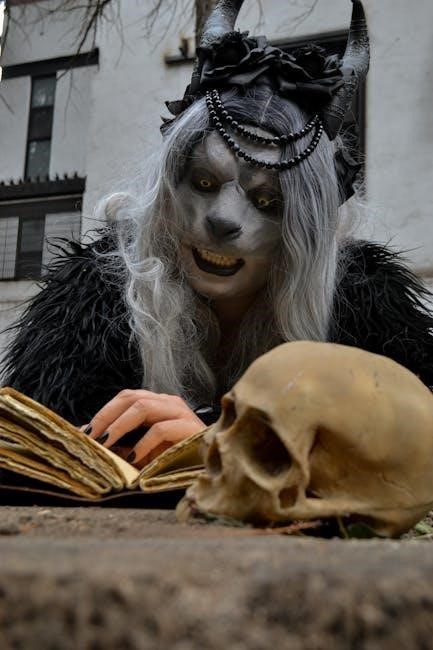
Van Richten’s Guide: A Review and Legacy
Van Richten’s Guide to Ravenloft significantly impacted the D&D horror genre, offering robust tools and inspiring countless campaigns with its dark themes.
Impact on the D&D Horror Genre
Van Richten’s Guide to Ravenloft revitalized horror within Dungeons & Dragons, moving beyond simple monster encounters to embrace gothic and psychological dread. It provided a framework for DMs to build truly terrifying campaigns, emphasizing atmosphere and player agency within bleak settings.
Prior to this guide, horror elements often felt secondary; now, they became central. The book’s influence is evident in the surge of horror-themed campaigns and adventures, inspiring creators to explore darker narratives and complex villains.
It legitimized the exploration of mature themes, corruption, and the loss of innocence, enriching the overall D&D experience and broadening its appeal to players seeking more than just heroic fantasy.
Strengths and Weaknesses of the Book
Van Richten’s Guide to Ravenloft excels in providing a wealth of resources for DMs, including detailed domains, compelling NPCs, and tools for crafting atmospheric horror. The character options – lineages and feats – are particularly strong, enhancing roleplaying possibilities.
However, some critics note a reliance on existing D&D systems, potentially limiting truly unique horror mechanics. The sheer volume of content can also be overwhelming for new DMs.
Despite these minor drawbacks, the book’s strengths – its inspirational material and focus on narrative – significantly outweigh its weaknesses, making it a valuable addition to any D&D collection.
Resources for Further Exploration
Van Richten’s Guide to Ravenloft opens doors to a rich history of the setting. Exploring the original Ravenloft campaign setting materials, like the 1983 boxed set and subsequent modules, provides invaluable context.
Online communities, such as EN World, offer discussions, campaign reports, and homebrew content. Roll20 Marketplace provides digital assets for virtual tabletop play. Amazon offers the core book and supplemental materials.
Delving into gothic horror literature and films – inspirations for Ravenloft – will further enhance your understanding and campaign design.